When the Dark Doesn't Dissipate: A Dream Interpreter’s Deep Dive into Chronic Nightmares and Mental Health
Introduction: The Uninvited Guest That Never Leaves
In my fifteen years of practice as a dream interpreter, I have sat across from hundreds of individuals—CEOs, artists, veterans, and students—who all share a singular, haunting look in their eyes. It is the look of someone who dreads the setting sun.
"I’m afraid to close my eyes," a client I’ll call David told me last week. "Because I know he will be there."
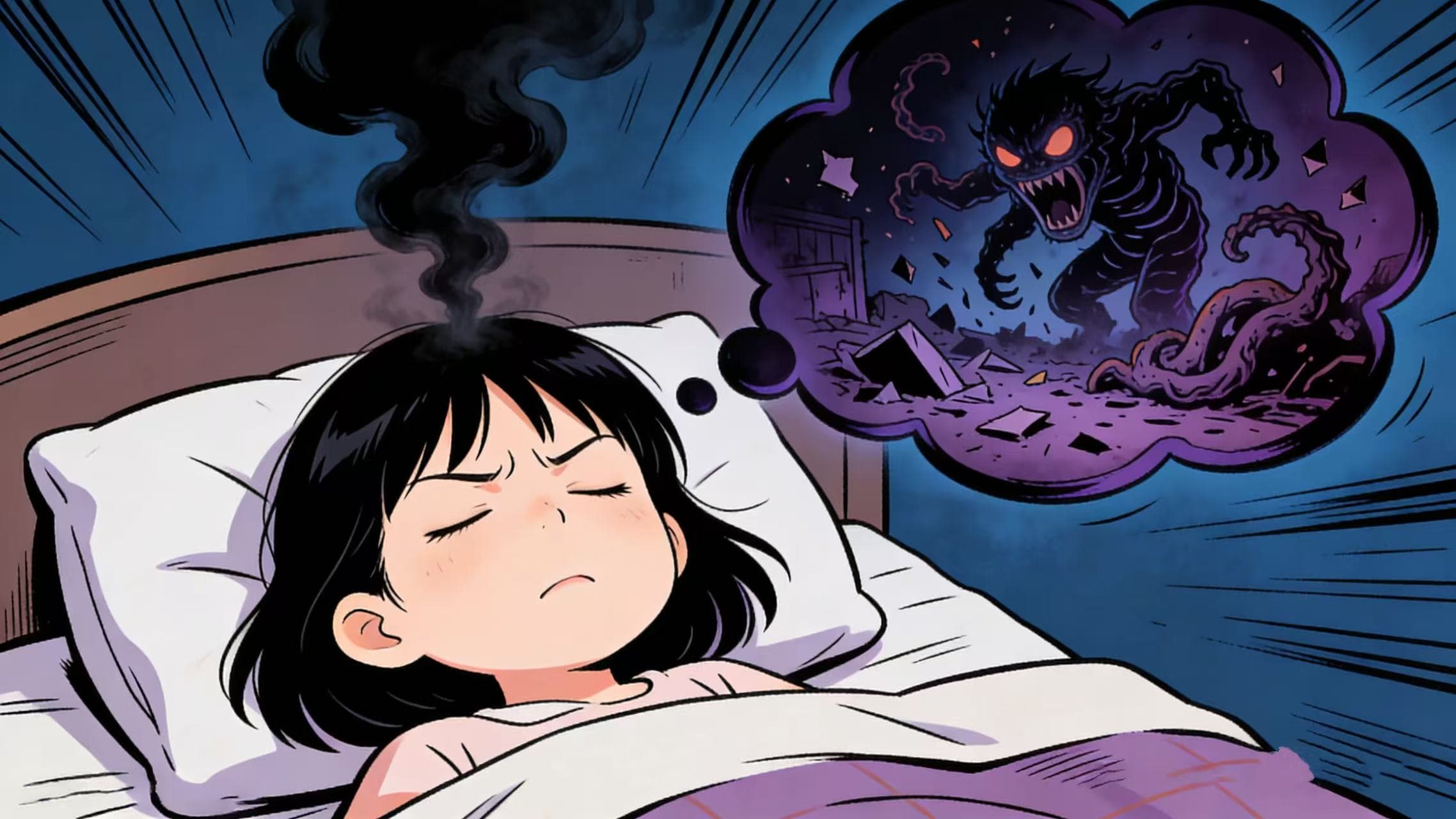
David wasn't talking about a real-life stalker, but a recurring shadow figure that had tormented his sleep for six months. For David, and millions like him, sleep is not a sanctuary; it is a battlefield.
While my work often involves decoding the whimsical or the profound—flying over cities, finding hidden rooms—there is a darker side to the dream world that demands serious attention: Chronic Nightmares.
This article is not just a collection of spooky stories. It is a comprehensive, evidence-based exploration of how chronic nightmares serve as a critical alarm system for our mental health. Drawing from both my clinical experience in dream analysis and current psychiatric research, we will uncover why these nightmares happen, what they are trying to tell us, and how we can finally wake up.
Part 1: Defining the Darkness – What Are Chronic Nightmares?
To understand the problem, we must first define it. We all have bad dreams occasionally—perhaps you missed a final exam or showed up to work naked. These are normal responses to daily stressors.
Chronic nightmares are different. According to the Diagnostic and Statistical Manual of Mental Disorders (DSM-5), nightmare disorder is characterized by:
- Frequency: Occurring at least once a week, often multiple times.
- Intensity: Dreams are vividly realistic, disturbing, and often involve threats to survival, security, or physical integrity.
- Impact: They cause significant distress or impairment in social, occupational, or other important areas of functioning during the day (mood disturbance, sleep avoidance).
Nightmares vs. Night Terrors: A Crucial Distinction
In my practice, parents often confuse the two.
- Nightmares occur during REM (Rapid Eye Movement) sleep, usually in the latter half of the night. You wake up with a clear memory of the dream and are instantly alert.
- Night Terrors happen during deep NREM (Non-REM) sleep. The person may scream or thrash but is often not fully awake and has no memory of the event the next morning.
Why this matters: Treatment protocols for nightmares (psychological engagement) differ vastly from night terrors (physiological regulation).
Part 2: The Canary in the Coal Mine – The Mental Health Connection
Why do we have nightmares? From a neurological standpoint, the amygdala (the brain's fear center) is highly active during REM sleep. However, in a healthy brain, the prefrontal cortex (the logic center) helps contextualize this fear.
In those suffering from mental health conditions, this balance is disrupted. The "brake" of the prefrontal cortex fails, and the amygdala runs wild.
1. Post-Traumatic Stress Disorder (PTSD)
This is the most well-documented link. Studies from the National Center for PTSD indicate that 71% to 96% of people with PTSD experience nightmares, compared to 3-5% of the general population.
In my work, PTSD dreams are distinct. They are often "replicative"—playing back the traumatic event exactly as it happened, or "symbolically replicative"—where the emotions are the same, but the scenario changes (e.g., a war veteran dreaming of being trapped in a burning building instead of a combat zone).
2. Anxiety and Depression
You don't need a singular trauma to suffer from chronic nightmares. Generalized Anxiety Disorder (GAD) often manifests as dreams of being chased, losing control, or catastrophic failure.
- The Anxiety Loop: Anxiety causes nightmares -> Nightmares cause poor sleep -> Poor sleep increases anxiety.
- Depression: Interestingly, those with depression often have dreams that are not "scary" in the traditional sense, but are permeated with overwhelming feelings of hopelessness, rejection, or isolation.
3. Substance Abuse and Withdrawal
Alcohol and certain drugs suppress REM sleep. When a person stops using them, the brain experiences "REM rebound," leading to intensely vivid and often terrifying dreams. This is a common hurdle for my clients in recovery.
Part 3: Case Studies from the Dream Lab
Note: Names and identifying details have been changed to protect client confidentiality.
Case Study A: The Falling Elevator
Client: Sarah, 34, Marketing Executive. The Dream: Every Tuesday and Thursday night, Sarah dreamt she was in a glass elevator that would shoot up 100 floors, then the cable would snap. She would wake up right before impact. The Analysis: Sarah initially thought this was a fear of heights. However, through our sessions, we uncovered that these nights preceded her bi-weekly meetings with a verbally abusive boss. The "loss of control" in the elevator mirrored her waking life helplessness. The Outcome: We used Imagery Rehearsal Therapy (IRT) (more on this later). Sarah rewrote the ending: instead of crashing, the elevator would sprout wings and fly safely. Within three weeks, the nightmares ceased. She eventually quit the job, which was the ultimate cure.
Case Study B: The Silent Intruder
Client: Michael, 42, Firefighter. The Dream: A dark, faceless figure standing at the foot of his bed. It never moved, but Michael felt an intense, paralyzing malevolence. The Analysis: This was a classic manifestation of Sleep Paralysis combined with a nightmare, often called "The Incubus" phenomenon. However, the emotional tone was linked to "survivor's guilt" from a recent rescue operation where he couldn't save everyone. The Outcome: We focused on "lucidity." Training Michael to recognize he was dreaming. Once he realized the figure was a projection of his own guilt, he was able to mentally "speak" to it. The figure didn't disappear immediately, but it became less threatening, transforming from a monster into a grieving bystander.
Part 4: The Science – Why Does Your Brain Torture You?
It seems counterintuitive. Why would evolution design a brain that scares itself awake?
Leading theories, such as the Threat Simulation Theory (TST) proposed by Antti Revonsuo, suggest that dreaming is a biological defense mechanism. It’s a virtual reality simulator where our ancestors practiced escaping predators.
In the modern world, we aren't running from saber-toothed tigers. We are running from deadlines, debt, and divorce. The brain, however, uses the same ancient hardware. It translates "fear of public speaking" into "being naked in front of a crowd."
When this system goes into overdrive—often due to dysregulated cortisol levels or an overactive sympathetic nervous system—the simulation becomes a torture chamber.
Part 5: Actionable Strategies – How to Reclaim the Night
If you are reading this, you likely want the nightmares to stop. Here are the evidence-based strategies I use with my clients, ranging from self-help to professional interventions.
1. Imagery Rehearsal Therapy (IRT)
This is the "Gold Standard" for nightmare treatment, recommended by the American Academy of Sleep Medicine.
- Step 1: Write down the nightmare in detail.
- Step 2: Change the ending to something positive or neutral. (The monster becomes a puppy; the falling turns into flying).
- Step 3: Visualize this new ending for 10-20 minutes during the day.
- Why it works: It creates a "cognitive groove." You are training your brain to take a different path when the dream script starts running.
2. The "Worry Time" Technique
Many nightmares are fueled by "unfinished business" from the day.
- Practice: Set aside 15 minutes roughly 2 hours before bed to write down everything you are worried about and a "next step" for each.
- Result: You are telling your brain, "I have handled this. You don't need to process it tonight."
3. Lucid Dreaming Therapy (LDT)
This involves training yourself to become aware that you are dreaming while you are dreaming.
- Reality Checks: Ask yourself "Am I dreaming?" throughout the day. Eventually, you will ask it in the dream.
- Control: Once lucid, you can alter the dream narrative or simply wake yourself up.
- Warning: For those with severe trauma, this should be done with a therapist, as it can sometimes induce sleep paralysis if not managed correctly.
4. Sleep Hygiene & Environment
- Temperature: Keep the room cool (around 65°F / 18°C). Overheating is a known nightmare trigger.
- Screens: Blue light suppresses melatonin and can fragment sleep, making you more likely to remember bad dreams.
- Diet: Avoid heavy meals, caffeine, and alcohol within 3 hours of bed.
5. Medical Intervention
Sometimes, therapy isn't enough.
- Prazosin: A medication originally for high blood pressure, found to be highly effective for PTSD-related nightmares by blocking adrenaline in the brain. Consult a psychiatrist about this.
Conclusion: Turning Ghosts into Guides
Chronic nightmares are debilitating, but they are not a life sentence. They are a signal—a loud, banging drum from your subconscious demanding attention.
In my experience, the goal shouldn't always be to "silence" the nightmare immediately, but to understand its message. Is it a processed trauma? An unacknowledged fear? A chemical imbalance?
By combining the intuitive wisdom of dream interpretation with the rigorous tools of modern psychology (like IRT and CBT-I), we can transform these nightly terrors. You can move from being a victim of your sleep to being the master of your subconscious.
Sweet dreams are not just a wish; they are a skill you can learn.
Frequently Asked Questions (FAQ)
Can stress cause chronic nightmares?
Yes. Stress is one of the most common triggers. When your brain is overloaded during the day, it attempts to process this overload at night.
When should I see a doctor about my nightmares?
If your nightmares:
- Disrupt your sleep regularly.
- Cause you to fear going to sleep.
- Lead to daytime impairment (falling asleep at work, irritability).
- Are causing physical injury (thrashing, falling out of bed).
Is Imagery Rehearsal Therapy effective?
Absolutely. It is backed by decades of research and is recommended by the American Academy of Sleep Medicine. It empowers the dreamer to rewrite the narrative, turning a passive victim role into an active creator role.
Do nightmares mean I am going crazy?
No. Nightmares are a normal (albeit unpleasant) reaction to abnormal levels of stress or trauma. They are your brain's attempt to heal.