Beyond the Pillow: Why a Dream Interpreter Is the Key to Your Subconscious
Introduction
We’ve all been there. You wake up with your heart racing, a lingering sense of sadness, or perhaps a bizarre image stuck in your mind—like showing up to a business meeting in your pajamas or trying to run through molasses.
For most people, the morning routine washes these images away. We brush our teeth, grab coffee, and forget. But what if those nightly visions weren't just random neurological firing? What if they were a letter from your subconscious, waiting to be opened?
This is where the role of a dream interpreter becomes vital. Whether through psychological analysis or spiritual intuition, interpreting dreams is about translating the cryptic language of your mind into actionable insights for your waking life.
What Exactly Does a Dream Interpreter Do?
There is a common misconception that dream interpretation is essentially fortune-telling—a carnival trick involving crystal balls. While some traditions view dreams as premonitions, a modern dream interpreter acts more like a translator or a detective.
Your subconscious mind doesn't speak in English or Spanish; it speaks in symbols, emotions, and archetypes. A professional interpreter helps you:
- Identify Patterns: Noticing recurring themes you might miss.
- Contextualize Symbols: A snake might mean "danger" to one person, but "healing" to a doctor. Context is king.
- Uncover Repressed Emotions: Bringing hidden anxieties to the surface so they can be processed.
The Science and the Spirit: Two Schools of Thought
When you look for a dream interpreter, you’ll generally encounter two main approaches. The best interpretations often blend both.
1. The Psychological Approach (The Freud & Jung Route)
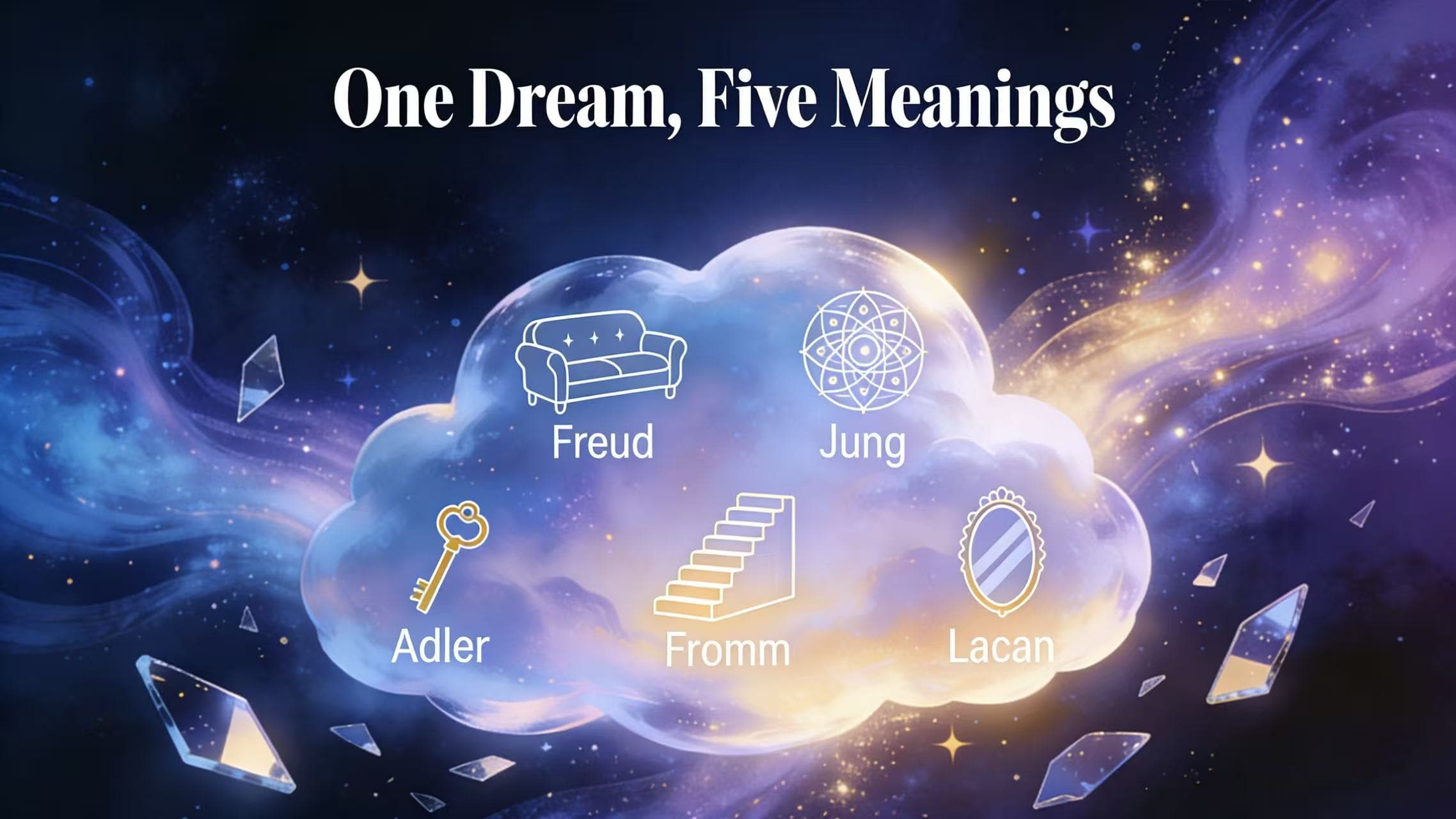
Sigmund Freud famously called dreams the "royal road to the unconscious." From a psychological perspective, dream interpretation is about conflict resolution.
- Freud believed dreams were wish fulfillments, often related to repressed desires.
- Carl Jung, however, introduced the concept of the "Collective Unconscious." He believed we dream in universal archetypes (The Shadow, The Hero, The Mother).
2. The Spiritual & Intuitive Approach
For centuries, cultures from Ancient Egypt to Indigenous tribes have viewed dreams as messages from the divine or the soul. A spiritual dream interpreter looks at the energy of the dream. Is it a warning? Is it guidance? This approach often resonates with people who feel their dreams are "visitations" rather than just brain activity.
3 Common Dreams and What They Actually Mean
While every dreamer is unique, we share a collective human experience. Here is how an interpreter analyzes the "Big Three" common dreams:
The "Teeth Falling Out" Dream
The Amateur Guess: You need to see a dentist. The Interpreter’s View: This is rarely about oral hygiene. Teeth represent power, confidence, and ability to communicate. Losing them often signifies a feeling of powerlessness in a relationship or anxiety about "losing face" in a social situation.
The "Falling" Dream
The Amateur Guess: You are scared of heights. The Interpreter’s View: This is a classic insecurity signal. Who or what isn't supporting you right now? It often points to a lack of stability in your career or home life. Interestingly, if you enjoy the fall in the dream, it can mean you are ready to let go and surrender control.
The "Being Chased" Dream
The Amateur Guess: You watched a horror movie before bed. The Interpreter’s View: You are running away from something in your waking life. It’s usually an emotion (guilt, fear) or a responsibility you are avoiding. The "monster" chasing you is actually a part of yourself that you are refusing to acknowledge.
DIY: How to Think Like a Dream Interpreter
You don't always need a professional session to get started. You can train yourself to analyze your own nightly narratives. Here is the framework experts use:
- Record Immediately: You lose 90% of a dream's detail within 10 minutes of waking. Keep a journal or use a voice memo app the second your eyes open.
- Focus on the Feeling, Not the Picture: This is the golden rule. If you dreamt of a puppy, but you felt terrified, the terror is the truth—not the puppy. The emotion is the anchor.
- Ask "Where Else?" Ask yourself: "Where else in my life do I feel the same emotion I felt in the dream?" The answer usually unlocks the meaning immediately.
- Ignore Generic Dictionaries: Online dream dictionaries are often too broad. Your personal association with a symbol matters more than the general definition.
When Should You Seek a Professional?
While keeping a journal is great for self-reflection, there are times when an external perspective is necessary. You might want to consult an expert dream interpreter if:
- You suffer from recurring nightmares: This indicates a stuck trauma loop that needs to be broken.
- A dream feels "hyper-real": Some dreams feel more real than waking life. These are often significant, transformative experiences that require guidance to unpack.
- You are at a crossroads: If you are indecisive about a career change or a relationship, your dreams are likely screaming the answer, but your conscious bias is blocking it.
The Verdict
Dreams are the unedited, raw data of your life. Ignoring them is like receiving a nightly email from your inner wisdom and sending it straight to the spam folder.
Whether you start journaling tomorrow morning or choose to work with a professional dream interpreter, paying attention to your sleep can radically change your waking life. It’s time to stop sleeping through the messages and start listening.