How to Interpret Dreams: A Step-by-Step Guide from a Clinical Psychologist
How to Interpret Dreams: A Masterclass in Decoding Your Subconscious
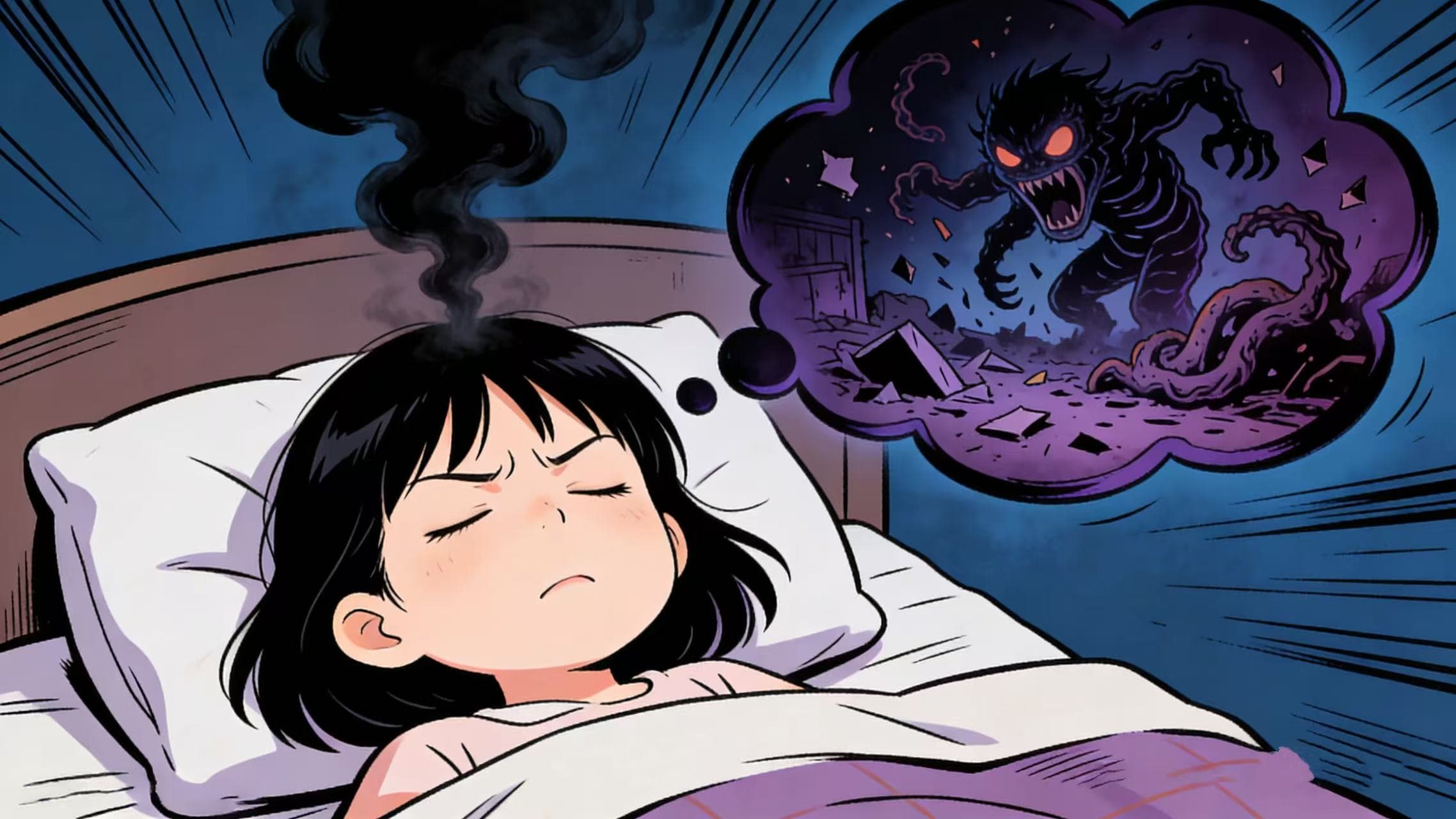
You wake up with your heart pounding. You were running through a house you’ve never seen before, but somehow, you knew it was your childhood home. Suddenly, your teeth started crumbling. You try to scream, but no sound comes out. Then, the alarm rings.
We have all been there. As a clinical psychologist and dream analyst for over a decade, the question I hear most often isn't "Why do I dream?" but "How do I interpret dreams?" How do we bridge the gap between the chaotic imagery of the night and the logical understanding of the day?
The truth is, dream interpretation is not about looking up "teeth" in a generic dictionary and finding a one-size-fits-all answer. It is a deeply personal, archaeological dig into your own psyche. In this guide, I will walk you through the professional framework I use with my clients to decode the language of the unconscious.
The Foundation: Why We Interpret
Before we dive into the "how," we must respect the "what." Dreams are not random firing of neurons, as some reductionist theories once claimed. They are emotional processing units.
Research in neuroscience shows that during REM (Rapid Eye Movement) sleep, the brain’s emotional centers (the amygdala) are highly active, while the logical centers (the prefrontal cortex) are dampened. This creates a unique state where your brain can process complex emotions—grief, anxiety, desire—without the censorship of your waking mind.
When you learn how to interpret dreams, you aren't just predicting the future; you are effectively performing self-therapy.
Step 1: The Capture (Don't Let It Fade)
The biggest obstacle to dream interpretation is memory. Dreams are chemically designed to be forgotten. The neurotransmitters necessary for long-term memory formation are suppressed during REM sleep.
The Golden Rule: If you don't write it down immediately, it’s gone.
- Keep a Journal: Keep a notebook or a voice recorder by your bed. Do not trust your brain to "remember it later."
- Stay Still: When you wake up, don't move. Physical movement engages the waking brain and flushes out the dream residue. Lay still for 60 seconds and replay the dream.
- Capture the Feeling: Even if you forget the visual details, write down the emotion. Were you panicked? Melancholic? Euphoric? The emotion is the anchor.
Step 2: Identify the "Day Residue"
Sigmund Freud, the father of psychoanalysis, coined the term "day residue". He observed that dreams often borrow trivial details from the previous 24-48 hours.
- Example: You dream of a blue car crashing.
- Day Residue: You saw a blue car in a commercial yesterday.
Many beginners stop here and say, "Oh, it was just because I saw that car on TV." This is a mistake. The unconscious mind is efficient; it doesn't pick random images. It chose that specific image to represent something deeper.
Ask yourself: Why did my mind choose this specific residue? What association do I have with it? Perhaps the blue car in the commercial reminded you of your father's old sedan, linking the dream to unresolved family dynamics.
Step 3: The Association Technique (The Core of Interpretation)
This is the most critical tool in my practice. Abandon the "Dream Dictionary." A snake in your dream does not mean the same thing as a snake in my dream.
- To me, a snake might represent healing (the medical caduceus) or transformation (shedding skin).
- To a client with a phobia, a snake represents pure, primal threat.
How to do it:
- Isolate the key symbols in your dream (e.g., The House, The Teeth, The Stranger).
- For each symbol, ask: "What is the first thing that comes to mind when I think of this?"
- Keep associating until you hit an emotional chord.
I once worked with a patient who dreamt of a broken watch.
- Dictionary definition: Fear of aging.
- Patient's association: "My grandfather gave me a watch like that... he was the only one who listened to me... I feel like no one listens to me at work right now."
- Interpretation: The dream wasn't about time; it was about a lack of validation and a longing for support.
Step 4: Analyze the Structure and Narrative
Dreams often follow a dramatic structure similar to a play or a movie. Jungian analysts look for:
- The Exposition: The setting and the characters. (Where are you? Who is there?)
- The Plot: The conflict or the action. (What is happening? What are you trying to do?)
- The Culmination: The climax or the turning point. (The chase ends, the monster speaks, you fall.)
- The Lysis: The resolution (or lack thereof).
Pay attention to the Lysis. Does the dream end with you escaping, or do you wake up right before the impact?
- Waking up before the end often signals an avoidance mechanism. Your psyche isn't ready to face the outcome yet.
- A recurring dream that changes its ending (e.g., you finally fight back against the attacker) is a powerful sign of psychological breakthrough and healing.
Step 5: The "Big Three" Lenses
When you are stuck, try viewing your dream through these three classic psychological lenses.
1. The Subjective Lens (Gestalt Therapy)
Assume that every part of the dream is YOU.
- If you dream of a monster chasing you, you are the monster. What part of yourself are you running from? Is it your anger? Your ambition? Your shame?
- If you dream of a crumbling house, you are the house. Which part of your life feels foundational but unstable?
2. The Objective Lens
Sometimes, a cigar is just a cigar. The dream might be processing a real-life conflict with a specific person. If you dream your spouse is cheating, it might not be literal prophecy, but it objectively reflects your current feelings of insecurity or distance in the relationship.
3. The Archetypal Lens (Jungian)
Some symbols are universal. Carl Jung called these archetypes.
- The Shadow: Dark figures, stalkers, intruders. (Repressed aspects of the self).
- The Anima/Animus: Figures of the opposite sex. (Your relationship with the feminine/masculine qualities within you).
- The Wise Old Man/Woman: Guides, teachers, voiceovers. (Your inner wisdom).
Common Dream Themes and How to Interpret Them
While personal association is king, some themes are so common due to our shared human biology and culture that we can offer general starting points.
Falling
- The Feeling: Loss of control, lack of support.
- The Question: Where in my life has the "floor dropped out"? Am I overwhelmed at work?
Being Chased
- The Feeling: Avoidance, fear.
- The Question: What am I running away from? A deadline? A difficult conversation? A painful memory?
Teeth Falling Out
- The Feeling: Powerlessness, embarrassment, loss of voice.
- The Question: Have I "lost my bite"? Did I say something I regret (spitting words out), or am I afraid to speak up?
Flying
- The Feeling: Freedom, escape, perspective.
- The Question: Have I recently risen above a problem? Or do I desperately need to "get away" from my daily grind?
When to Seek Professional Help
Most dreams are healthy emotional regulation. However, if you experience:
- Chronic Nightmares: Recurring, terrifying dreams that disrupt your sleep quality.
- PTSD Re-enactments: Dreams that replay a traumatic event exactly as it happened.
- Sleep Paralysis: Waking up unable to move, often accompanied by hallucinations.
These may require professional intervention. Therapies like Imagery Rehearsal Therapy (IRT) are highly effective for nightmare disorders.
Conclusion: The Letter from Your Soul
Learning how to interpret dreams is like learning a new language. At first, it seems like gibberish. But with patience, patterns emerge. You realize that your unconscious mind is not your enemy; it is your brutally honest friend.
Tonight, when you close your eyes, you aren't just sleeping. You are entering a private theater where you are the writer, the director, and the star. Don't ignore the show.
References:
- Freud, S. (1900). The Interpretation of Dreams.
- Jung, C. G. (1964). Man and His Symbols.
- American Psychological Association: The Science of Sleep